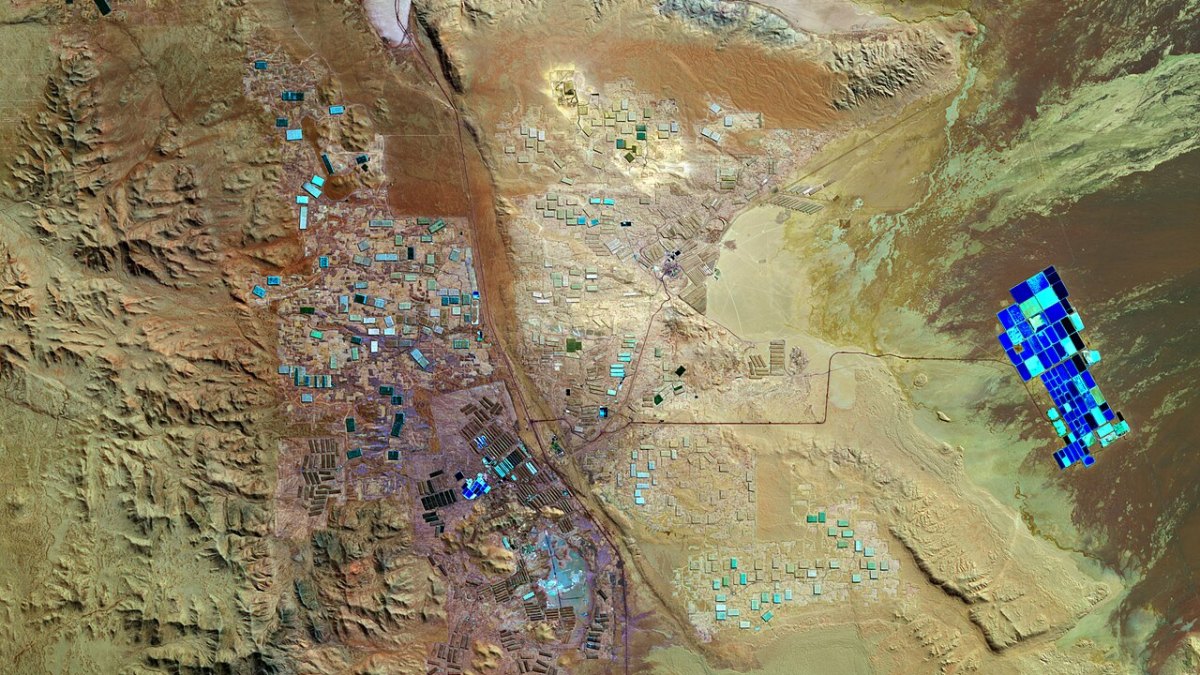
The Atacama Desert stretches roughly 1,000 kilometers along Chile's Pacific coast and inland to the Andes. Its driest core, around the town of Yungay and the Maria Elena weather station, receives an average of less than 1 millimeter of rain per year — and several locations have weather records spanning four centuries with zero measured precipitation.
The Atacama sits in a perfect storm of geographical bad luck for moisture. The Andes block weather systems from the Amazon to the east. The cold Humboldt Current cools the Pacific air offshore, dropping its moisture before it reaches land. A persistent high-pressure ridge over the southeast Pacific suppresses cloud formation. The result is a band of land where, in some places, soil has not been wet in human history.
Drier than Mars, in some ways
NASA's Ames Research Center began testing Mars exploration instruments in the Atacama in the early 2000s because the soil chemistry there is the closest analog on Earth to Martian regolith. A 2003 study published in Science measured organic carbon in Atacama soil samples at concentrations below the detection limit of the Viking landers' biology experiments — meaning if Viking had landed in Yungay instead of Mars, it would have reported the same null result.
Bacterial counts in the driest cores run as low as 10 to 100 cells per gram of soil, compared to 10 million to 1 billion cells per gram in typical garden soil. Some patches have produced no detectable life of any kind, despite the most sensitive culturing and DNA-extraction techniques.
The freak storm that killed the bacteria
In a 2018 paper published in Scientific Reports, biologist Dirk Schulze-Makuch and colleagues showed that even the hardy microbes which had adapted to the Atacama's hyperaridity were killed off in large numbers when an unprecedented rainstorm hit the region in 2015. The cells, evolved to extract trace water from fog and dew, ruptured when suddenly submerged. After 400 years of effective drought, water became toxic.
The mining towns built on bone-dry ground
The town of Calama, with about 165,000 residents, sits inside the Atacama and supports the world's largest open-pit copper mine, Chuquicamata. Water for both is piped from springs over 100 kilometers away. The town's tap water is desalinated and remineralized; its average humidity hovers at 17 percent; mummified pre-Columbian bodies in its cemeteries are so well preserved by the climate that some retain skin, hair, and stomach contents from over 7,000 years ago.
Long before the Egyptians wrapped a single mummy, the Atacama was already preserving its dead by simply being too dry for decay.
💬 Discussion (0)
Leave a Comment