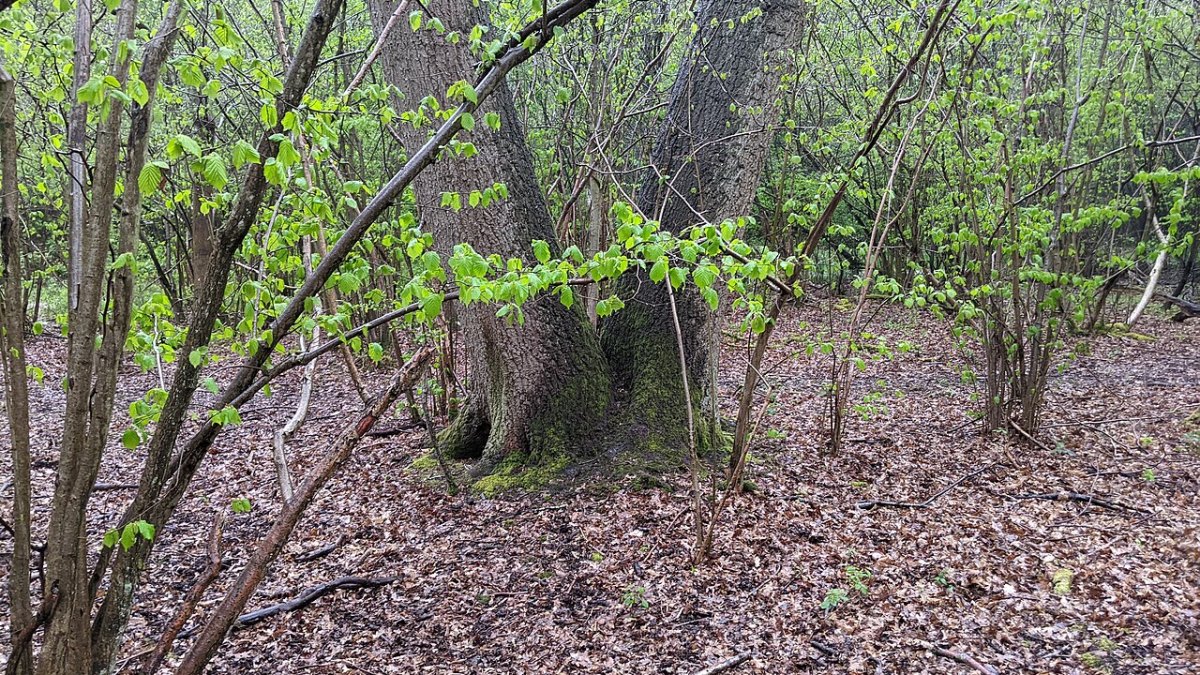
Drive into Fishlake National Forest in October and the hillside looks like a postcard. Roughly 47,000 quaking aspen trunks stand in close ranks, their coin-sized leaves turning gold in unison. That synchrony is the first clue that something unusual is happening. The leaves turn together because they belong to the same tree. Every stem above ground is a shoot, technically called a ramet, rising from a single, massive underground root network. The organism is named Pando, from the Latin pando: I spread.
How Scientists Know It Is One Individual
Botanist Burton Barnes first flagged Pando's unusual uniformity in the 1970s, noting that the leaf shape, bark texture, and autumn color across the entire stand were suspiciously identical. Formal genetic sampling confirmed what Barnes suspected: every stem shares the same DNA. There are no sexual offspring here, no seedlings, no genetic variation from one end of the 43-hectare plot to the other. Pando reproduces exclusively through vegetative sprouting, sending new shoots, called suckers, up from horizontal lateral roots that radiate outward just beneath the soil surface. One individual becomes 47,000 apparent trees simply by growing sideways underground for a very long time.
The Numbers
- Stems (apparent trees): ~47,000 genetically identical ramets
- Area: 43 hectares (106 acres)
- Mass: ~6,000 tonnes, heaviest known living organism on record
- Age estimate: 14,000 to 80,000 years, with many researchers citing ~80,000 years as a working figure; some recent analyses place the lower bound closer to 9,000 years
- Location: Fishlake National Forest, Sevier County, Utah, elevation approximately 2,697 metres (8,848 ft)
The mass figure, cited by the U.S. Forest Service and widely referenced in the scientific literature, dwarfs other contenders for the title of world's largest organism. The giant sequoia General Sherman, often cited as the world's largest tree by volume, weighs roughly 1,385 tonnes. Pando outweighs it more than four times over.
How It Actually Grows
Individual aspen stems are short-lived. A single trunk typically stands for 100 to 150 years before dying back. The root system, however, is under no such constraint. When a stem dies or is damaged, the root responds by sending up a new sucker from a lateral root. That sucker can emerge metres away from the parent stem, which is why the organism spreads rather than simply replacing itself in place. Paul Rogers, director of the Western Aspen Alliance at Utah State University and one of the leading researchers on Pando's health, has documented both the organism's resilience over millennia and its current vulnerability in detail through field monitoring plots established across the stand.
It Is Dying
Rogers' monitoring work, published in peer-reviewed journals and supported by the U.S. Forest Service, shows a consistent pattern: the oldest stems in Pando are senescing and falling, while new sucker recruitment is failing to keep pace. The primary driver is mule deer. Deer population densities in the area have increased substantially over recent decades, and deer preferentially browse aspen suckers, the young, tender shoots that are nutritionally valuable forage. A sucker browsed repeatedly never matures into a stem. Without mature stems, the root system receives less photosynthetic energy. A root system under sustained energy deficit eventually stops sending up new growth.
Drought compounds the problem. The Colorado Plateau has experienced prolonged below-average precipitation across multiple recent decades, stressing the root network at the same time that deer remove its capacity to photosynthesize. Rogers' plot data show that in sections of Pando without deer exclusion fencing, virtually no new stems are reaching maturity. In fenced sections, recruitment is robust. The fence, not the organism, is currently the deciding factor in whether Pando persists.
Why It Matters Beyond the Record Books
Pando is not simply a curiosity of size. Clonal aspen stands are a keystone habitat type across the American West, supporting disproportionately high biodiversity relative to their area. Cavity-nesting birds, understory wildflowers, pollinators, and large mammals all depend on aspen structure. Pando's fate is, in miniature, the fate of aspen ecosystems under simultaneous pressure from altered fire regimes, shifting precipitation, and ungulate overabundance. If an organism that survived the end of the last ice age cannot survive present-day deer densities, the management failure is entirely correctable, which makes it either a warning or an opportunity, depending on how quickly anyone acts.
💬 Discussion (0)
Leave a Comment