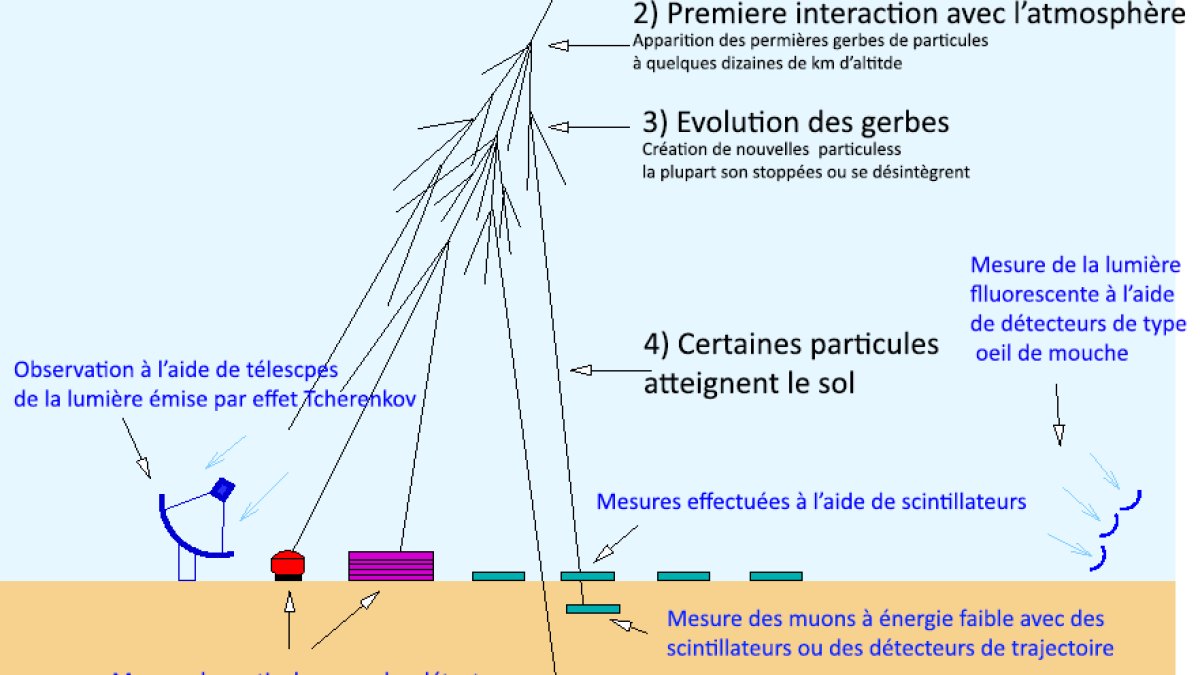
About 100,000 cosmic ray particles pass through every square meter of Earth every second. Most are protons or atomic nuclei accelerated to within a hair of the speed of light by ancient supernovas or active galactic nuclei billions of light-years away. Most are absorbed high in the atmosphere, but the secondary particles they produce — neutrons, muons, pions — rain down on the surface, pass cleanly through buildings and bodies, and slam into the silicon chips inside every computer, phone, and aircraft on the planet.
When one of these particles deposits its energy into a transistor in DRAM or SRAM, it can ionize enough silicon to induce a charge that flips a stored bit. A 0 becomes a 1, or vice versa. Engineers call this a single-event upset, or SEU. IBM's measurements put the rate at roughly one upset per 256 megabytes of RAM per month at sea level, and as much as 300 times higher at jetliner cruising altitude where the atmospheric shielding is thinner.
The Belgian voting machine that gained 4,096 phantom votes
In the 2003 Belgian federal election, a voting machine in the town of Schaerbeek tallied 4,096 more votes for the Christian Democratic candidate than the polling station had voters. Investigators ruled out fraud and software bugs. The likely culprit: a cosmic ray flipped the 13th bit of a vote-counter register. 2^12 equals exactly 4,096. The fingerprint matched perfectly.
How the industry quietly defends against it
Server-grade RAM has used error-correcting codes (ECC) for decades — extra parity bits that catch and repair single-bit flips on the fly. Most consumer laptops and phones still ship without ECC, betting that occasional silent corruption won't matter. Aircraft fly-by-wire systems and satellite controllers go further: they run three independent computers in parallel and vote on the answer, a technique called triple modular redundancy.
Even with countermeasures, cosmic-ray faults have produced famous bugs. A 2008 Qantas A330 lurched into a sudden uncommanded dive at 37,000 feet, throwing passengers into the ceiling and breaking bones; the Australian Transport Safety Bureau's final report cited an SEU in the air-data inertial reference unit as the most likely cause. Speedrunners of the Nintendo 64 game Super Mario 64 have caught what appears to be a cosmic ray flipping a coordinate bit and warping the player into an unreachable section of the map mid-run, on video, in front of millions.
The takeaway is uncomfortable. Every chip you own is, on a long enough timeline, getting hit by particles older than the solar system. The miracle is not that they cause occasional glitches — it's that they don't cause far more.
💬 Discussion (0)
Leave a Comment