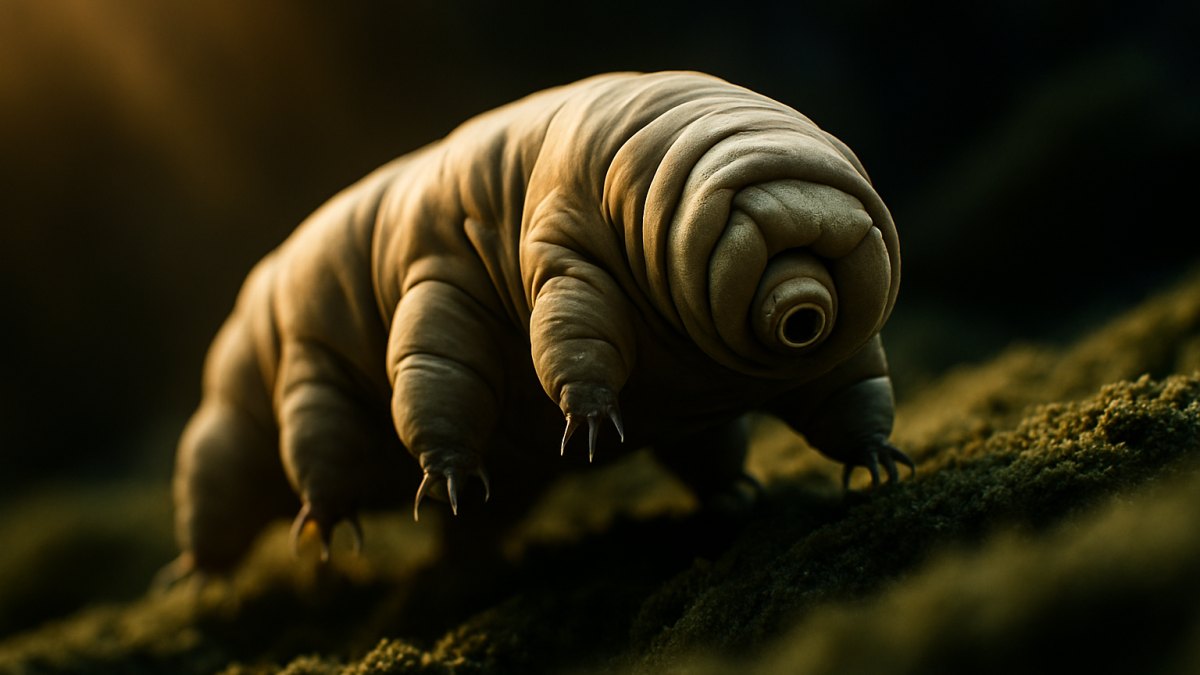
Imagine an organism that can thrive in environments where humans would perish almost instantly. Tardigrades, or water bears, have achieved this extraordinary feat, enduring radiation levels up to 5,000 grays. To put this into perspective, a dose of just 5 grays is lethal to humans. These microscopic creatures, measuring less than 1 millimeter in length, have fascinated scientists for decades due to their resilience. Tardigrades have been found in some of the harshest climates on Earth, from the icy tundras of Antarctica to the scorching deserts of Africa, and now, their ability to withstand extreme radiation further cements their status as one of nature's toughest survivors.
What Makes Tardigrades So Resilient?
The secret to tardigrades' resilience lies in their unique biological features. One key factor is their ability to undergo cryptobiosis, a state in which their metabolic processes come to a near halt. During cryptobiosis, tardigrades lose almost all water from their bodies, transforming into a desiccated form known as a 'tun'. This state allows them to survive without water for decades. Researchers have identified a protein called Dsup, short for 'damage suppressor', which shields their DNA from radiation damage. A study conducted in 2016 by the University of Tokyo demonstrated that introducing the Dsup protein to human cells reduced DNA damage by 40% when exposed to X-rays, highlighting its potential for biotechnological applications.
Implications for Space Exploration
The extraordinary resilience of tardigrades has not gone unnoticed by space scientists. Their ability to withstand extreme conditions makes them ideal candidates for studying life in outer space. In 2007, tardigrades became the first known animal to survive exposure to the vacuum and radiation of space during the European Space Agency's FOTON-M3 mission. This experiment opened up new avenues for research on the potential for life on other planets and the development of life-support systems for long-duration space travel. NASA and other space agencies continue to study tardigrades to understand how their biological mechanisms can be applied to protect astronauts from cosmic radiation during missions to Mars and beyond.
Tardigrades' Role in Scientific Research
Beyond their potential in space exploration, tardigrades are valuable in scientific research for other reasons. Their genomes have been sequenced, providing insights into the evolutionary adaptations that allow them to survive in extreme environments. The study of tardigrades has implications for improving our understanding of DNA repair mechanisms, which could lead to advances in medical treatments for radiation exposure. In 2019, researchers at the University of North Carolina discovered that tardigrades have a unique set of genes that help repair DNA in the presence of radiation, further illustrating their potential as a model organism for studying radiation resistance. With around 1,300 species identified so far, ongoing research continues to uncover the mysteries behind their resilience.
In conclusion, tardigrades exemplify the incredible adaptability of life on Earth. Their ability to withstand 5,000 grays of radiation is just one of the many remarkable traits these creatures possess. As scientists continue to explore their potential applications in biotechnology and space exploration, the humble tardigrade may hold the key to advancements that benefit humanity. Whether surviving the harshest conditions on Earth or enduring the extremes of space, tardigrades remain unparalleled in their resilience, inspiring awe and curiosity in equal measure.
💬 Discussion (0)
Leave a Comment