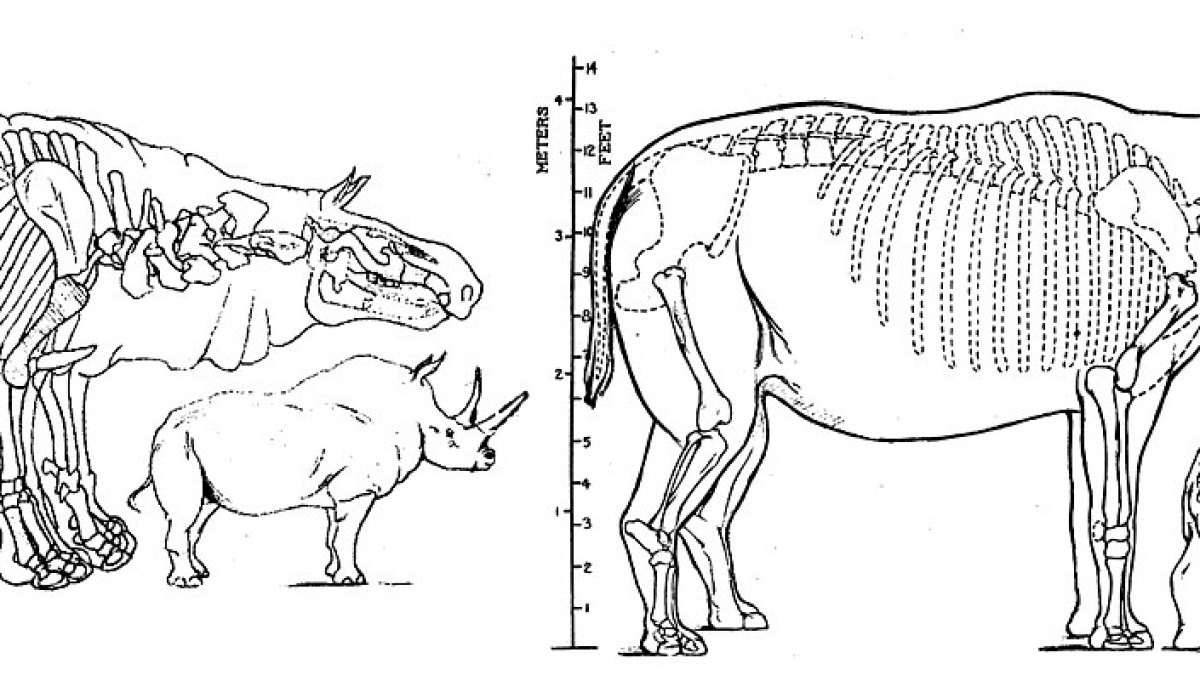
The Paraceratherium, often hailed as the largest land mammal to have ever walked the Earth, is a fascinating subject for paleontologists and animal enthusiasts alike. This colossal creature reached extraordinary heights and weights, estimated to be up to 16 feet tall and nearly 20 tons heavy. As a relative of the modern rhinoceros, the Paraceratherium lived during the Oligocene epoch, around 34 to 23 million years ago.
Physical Characteristics
The sheer size of the Paraceratherium is what sets it apart from other prehistoric giants. This herbivorous mammal had long, pillar-like legs that supported its massive frame, allowing it to graze on high foliage much like today's giraffes. Its neck, although not particularly long compared to its overall body, facilitated access to a variety of vegetation in its habitat.
Despite its massive size, the Paraceratherium's skull was relatively small. It had a long, prehensile upper lip or possibly a short trunk, similar to that of a modern tapir, which helped it strip leaves from trees. The lack of horns, which is a distinguishing feature of its modern relatives, suggests it relied on its size as a primary defense mechanism.
Habitat and Range
Paraceratherium roamed across vast areas that are now parts of Asia, including regions that are present-day Pakistan, India, China, Mongolia, and Kazakhstan. During the Oligocene epoch, these regions offered lush, forested environments that supported the herbivorous diet of this giant mammal. Fossil evidence indicates that Paraceratherium preferred open woodlands and forested floodplains, which provided ample food sources.
Scientific Discoveries
The first fossils of Paraceratherium were discovered in the early 20th century, and since then, several specimens have been unearthed, offering insights into its massive size and lifestyle. The most notable discoveries were made by famed paleontologist Sir Clive Forster Cooper in the 1920s, who conducted extensive research in the Baluchistan region of Pakistan. These fossils have been crucial in understanding the evolution of perissodactyls, the order of odd-toed ungulates that includes horses and rhinos.
Despite its impressive size and dominance during its time, the exact reasons for the extinction of Paraceratherium remain speculative. Changes in climate and vegetation, along with competition from other herbivores, are often cited as potential factors contributing to its disappearance.
Legacy of the Largest Land Mammal
Paraceratherium remains a subject of great interest and intrigue, symbolizing the diversity and adaptability of ancient life on Earth. Its gigantic stature and unique characteristics continue to captivate scientists, offering a glimpse into the ecosystems of the past. While much about this giant remains a mystery, each fossil discovery adds a piece to the puzzle of its existence, helping us understand the scale and scope of prehistoric life.
💬 Discussion (0)
Leave a Comment