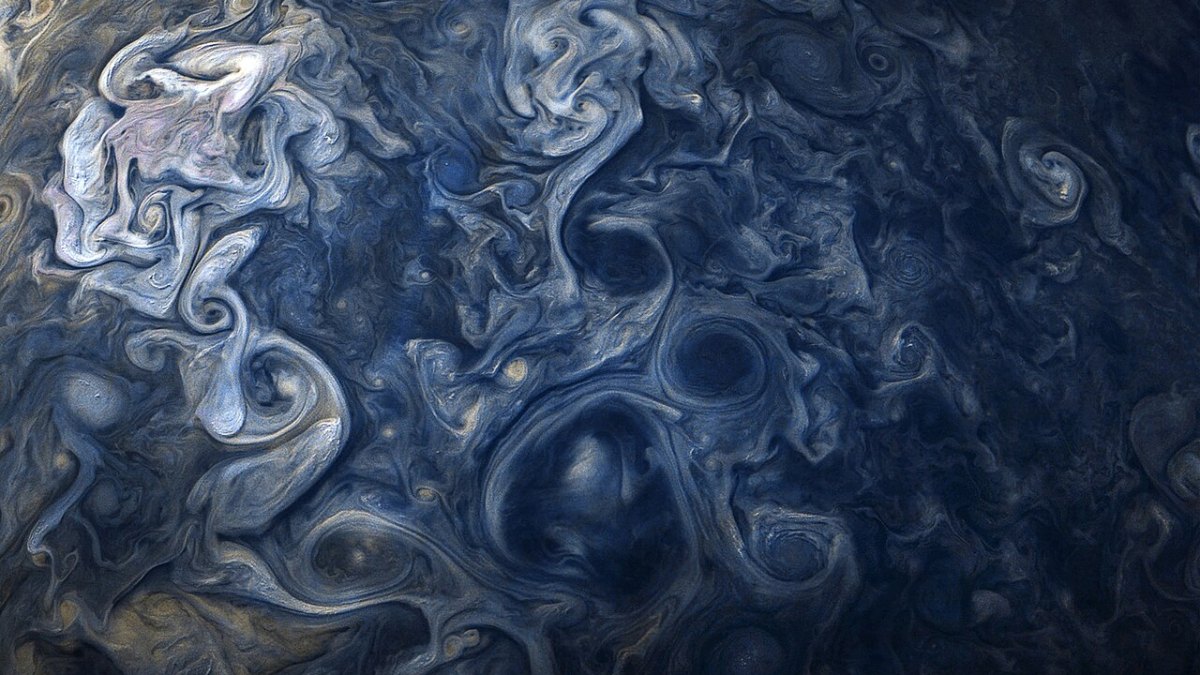
Jupiter, the largest planet in our solar system, takes a staggering 4,332 Earth days to complete a single orbit around the Sun. That’s nearly 12 Earth years for just one Jovian year! This astonishing duration is primarily due to its immense distance from the Sun, averaging about 484 million miles (778 million kilometers). While Earth races through its orbit in 365.25 days, Jupiter’s leisurely journey highlights its otherworldly scale and the vastness of our solar system. The planet's enormous mass, which is over 300 times that of Earth, also plays a role in its extensive orbit period, further setting it apart in the celestial neighborhood.
Jupiter's Orbit and Distance
Jupiter's orbit is not just lengthy; it’s also elliptical, with a slight eccentricity of 0.049. This means it doesn’t travel in a perfect circle but rather in an elongated path. At its closest approach, known as perihelion, Jupiter is approximately 460 million miles (740 million kilometers) from the Sun. Conversely, at aphelion, its farthest point, Jupiter reaches about 508 million miles (816 million kilometers) away. This variance in distance affects not only its year length but also its speed, with the planet moving faster when closer to the Sun. The average orbital speed is approximately 29,236 miles per hour (47,051 kilometers per hour), a pace that, despite its swiftness, still results in the long Jovian year.
Comparative Planetary Years
When comparing planetary years within our solar system, Jupiter's lengthy orbit is contrasted sharply with that of Mercury, which orbits the Sun in just 88 Earth days. Even our own Earth’s year pales in comparison to Jupiter’s 4,332-day journey. Saturn, the next planet outward from Jupiter, has a year that lasts about 10,759 Earth days or roughly 29.5 Earth years. These vast differences in orbital periods are primarily due to the planets’ distances from the Sun, as dictated by Kepler’s laws of planetary motion. The further a planet is from the Sun, the slower its orbital speed and the longer its year. This relationship underscores the diverse dynamics of planetary motion in our solar system.
The Impact on Jupiter’s Atmosphere and Moons
Jupiter’s extended year has significant implications for its atmosphere and the numerous moons that orbit it. The planet’s gaseous atmosphere, characterized by its Great Red Spot, experiences long seasonal variations, although these changes are not as pronounced as those on Earth due to Jupiter’s relatively small axial tilt of just 3.13 degrees. This tilt results in minimal seasonal changes compared to Earth’s pronounced four-season cycle. Additionally, Jupiter's vast gravitational field influences its 79 known moons, which include the four largest: Io, Europa, Ganymede, and Callisto. These moons exhibit complex orbital resonances and interactions, partly due to the planet’s immense gravitational pull and the extended duration of its year.
Jupiter's lengthy orbit around the Sun is a testament to the planet's grandeur and the complexity of our solar system. Understanding the dynamics of Jupiter’s year helps astronomers and scientists gain insights into planetary motion and the forces that govern our celestial neighborhood. As we continue to explore the cosmic wonders beyond Earth, Jupiter remains a focal point of interest, offering a glimpse into the vast and varied choreography of planetary orbits.
- Jupiter's year is approximately 11.86 Earth years long.
- The planet's average distance from the Sun is 484 million miles.
- Jupiter has 79 known moons, including the Galilean moons.
- The Great Red Spot is a massive storm persisting for centuries.
- Jupiter's axial tilt is only 3.13 degrees, leading to minimal seasonal changes.
💬 Discussion (0)
Leave a Comment