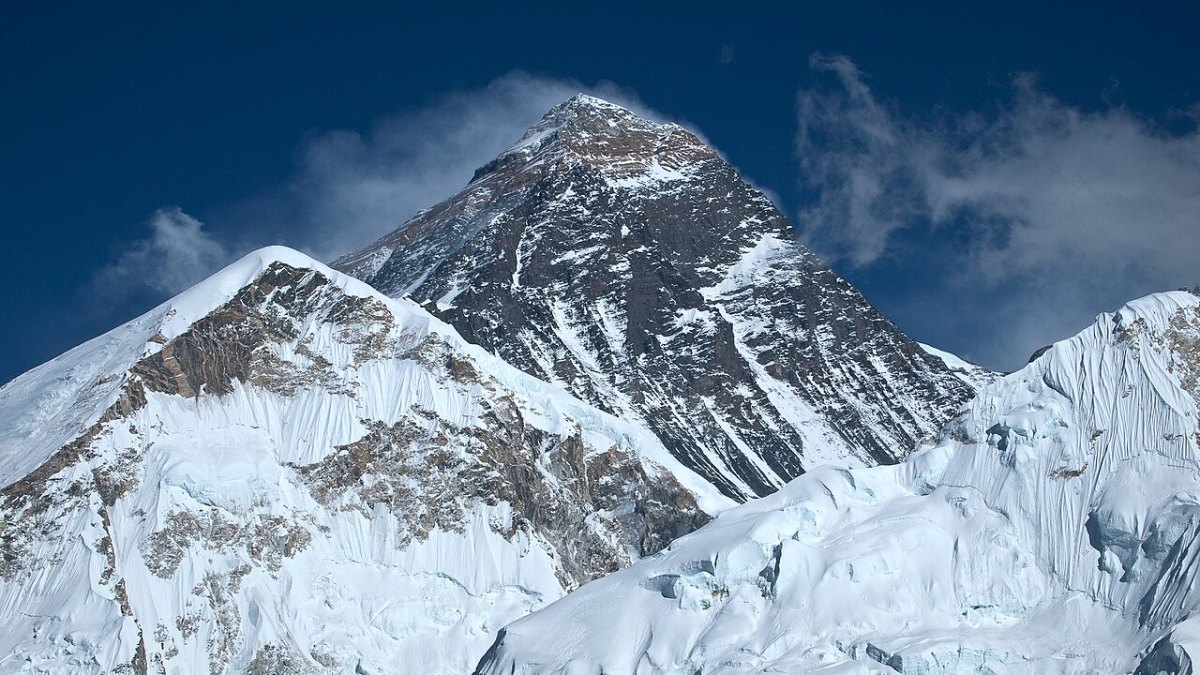
Mount Everest, the pinnacle of Earth's natural wonders, astonishes not only with its towering height of 8,848.86 meters but also with its astonishing annual growth rate. Recent studies reveal that this iconic peak grows about 8 centimeters each year. This growth is not arbitrary but a result of complex tectonic movements. The collision between the massive Indian and Eurasian plates is the driving force behind this phenomenon. This ongoing geological process raises questions about the future height of the tallest mountain on Earth and its implications for both climbers and researchers.
The Role of Tectonic Activity
The Indian tectonic plate, moving northward at a rate of approximately 4 to 5 centimeters per year, collides with the Eurasian plate, causing the Himalayas to rise. This collision is responsible for not only the elevation of Mount Everest but also the entire Himalayan range. The pressure exerted by this collision forces the Earth's crust to buckle and fold, leading to the uplift of the terrain. This dynamic process has been ongoing for millions of years, with the Himalayas continuing to rise at a rate of about 1 centimeter per year on average. However, localized variations mean that Mount Everest itself grows even faster.
Measuring the Mountain's Growth
Accurately measuring the growth of Mount Everest is a complex task undertaken by scientists using advanced technologies. GPS technology plays a crucial role in these measurements, allowing for precise tracking of Everest's elevation changes. In 2020, a joint survey by China and Nepal established Mount Everest's official height at 8,848.86 meters, taking into account both geological uplift and technological advancements in measurement accuracy. These surveys are critical for understanding the ongoing impact of tectonic activity and for ensuring the safety of climbers navigating the mountain's ever-changing landscape.
Implications of a Growing Everest
The continuous growth of Mount Everest has significant implications for both the natural environment and human activities. For climbers, the increasing height may present new challenges, as the mountain's topography changes subtly over time. Additionally, the growth impacts local weather patterns and ecological systems, as the rising mountain affects wind and precipitation patterns. Researchers also keep a close watch on the potential for increased seismic activity in the region, which could be influenced by the ongoing tectonic movements. Understanding these factors is crucial for predicting future changes and for managing the environmental and human impacts of a growing Everest.
- The Himalayas, including Everest, are one of the youngest mountain ranges, formed around 50 million years ago.
- Over 10,000 people have attempted to climb Mount Everest since Edmund Hillary and Tenzing Norgay's successful ascent in 1953.
- The mountain's continuous growth may influence the melting patterns of glaciers in the region, impacting water supply for millions.
As Mount Everest continues its upward journey, driven by the relentless push of tectonic forces, it remains a symbol of nature's power and complexity. This annual increase in height not only fascinates scientists and adventurers alike but also underscores the dynamic nature of our planet. Keeping a vigilant eye on Everest's growth, researchers strive to understand the broader implications for the region and the world. The challenges and opportunities presented by this natural wonder continue to captivate the imaginations of all who look toward its towering summit.
💬 Discussion (0)
Leave a Comment