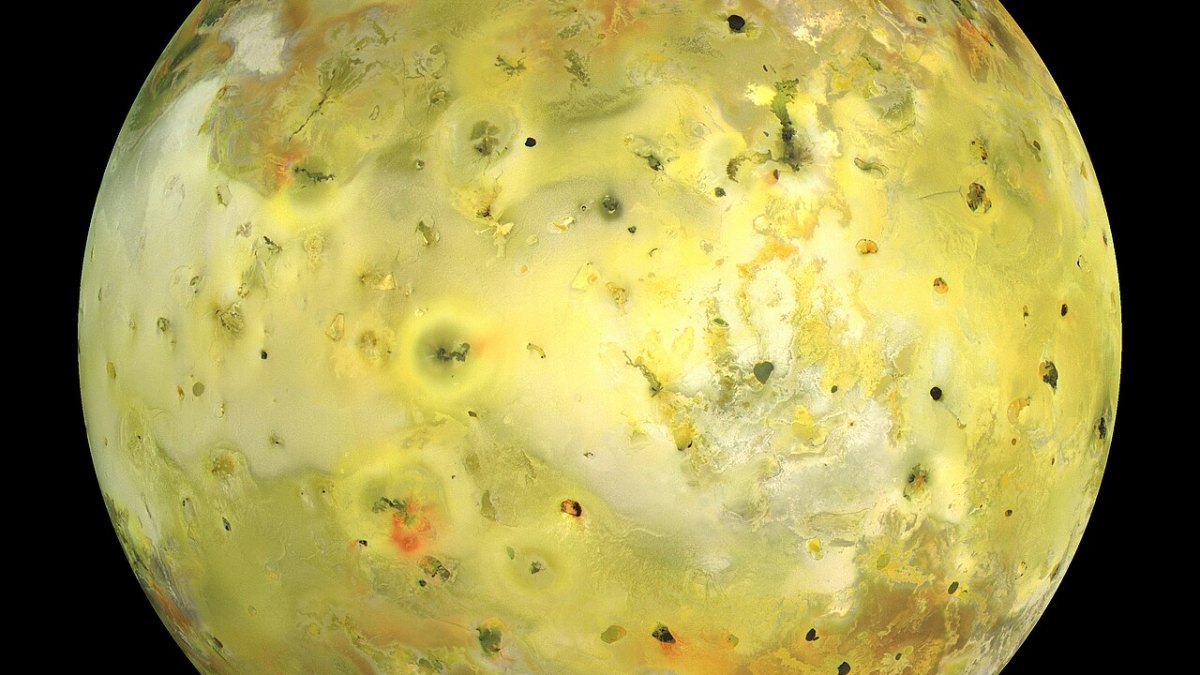
Jupiter, the giant of our solar system, boasts a staggering 79 moons, more than twice the number of days in a year. This immense collection of natural satellites showcases the planet's powerful gravitational influence. Among these moons, Ganymede stands out as the largest not only orbiting Jupiter but also the largest moon in the entire solar system, with a diameter of 5,268 kilometers. Discovered by Galileo Galilei in 1610, Ganymede is even larger than the planet Mercury. The sheer number and size of Jupiter's moons offer astronomers a unique opportunity to study the dynamics of planetary systems.
The Diversity of Jupiter's Moons
Jupiter's moons vary significantly in size and characteristics, ranging from tiny moonlets only a few kilometers across to massive bodies like Ganymede and Callisto. Callisto, slightly smaller than Ganymede, measures about 4,821 kilometers in diameter and is heavily cratered, indicating a long history of cosmic collisions. Europa, another of Jupiter's significant moons, is of particular interest to scientists due to its icy surface, which may conceal a subsurface ocean. This potential ocean is considered one of the most likely places to find extraterrestrial life in our solar system. The diversity among these moons provides a wealth of information about the conditions and processes that shape planetary bodies.
The Gravitational Influence of Jupiter
Jupiter's massive gravitational field, the strongest of any planet in our solar system, plays a crucial role in its ability to capture and maintain such a large number of moons. With a mass over 300 times that of Earth, Jupiter's gravity is strong enough to influence the orbits of distant objects, including comets and asteroids. This gravitational pull can capture passing space rocks, turning them into new moons or altering their trajectories. The planet's strong magnetic field also affects its moons, particularly Io, the most volcanically active body in the solar system, due to the intense tidal forces generated by Jupiter's gravity. Understanding these interactions helps astronomers learn more about gravitational dynamics.
Impact on Our Understanding of the Solar System
Studying Jupiter and its moons has profound implications for our understanding of planetary formation and evolution. The discovery of these moons and their diverse characteristics has led to insights into the early solar system's conditions. For instance, the Galilean moons—Io, Europa, Ganymede, and Callisto—are believed to have formed from the primordial disk of gas and dust surrounding Jupiter, similar to how planets formed around the Sun.
- Io's volcanic activity provides clues about tidal heating.
- Europa's subsurface ocean is a prime target in the search for life.
- Ganymede's magnetic field suggests a partially liquid core.
- Callisto's ancient surface offers a window into the past.
In conclusion, Jupiter's 79 moons serve as a natural laboratory for understanding planetary systems and their evolution. Each moon, with its unique features and characteristics, provides valuable data that enhance our knowledge of the cosmos. As technology advances, future missions to Jupiter and its moons may uncover even more secrets about the universe, potentially altering our understanding of life's possibilities beyond Earth.
💬 Discussion (0)
Leave a Comment