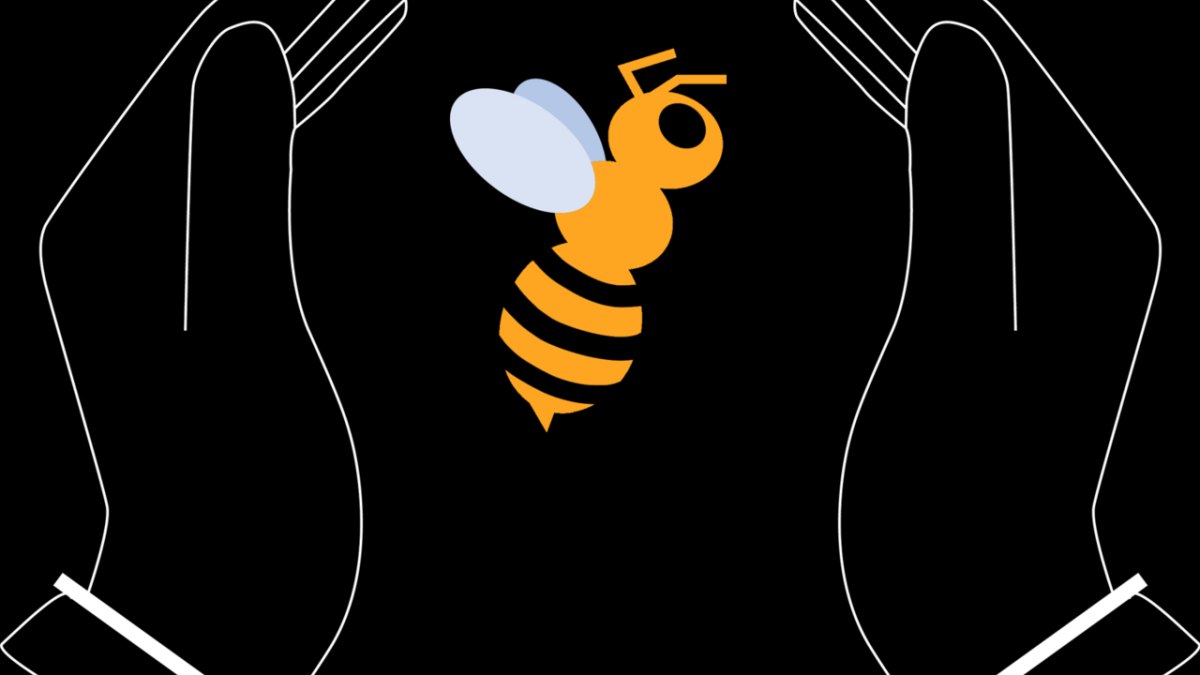
Somewhere inside a dark beehive, on a vertical sheet of wax comb, a forager bee is drawing a map. She has no pen, no paper, and no light to see by. What she has is her body. She runs a short straight line while waggling her abdomen rapidly from side to side, then loops back to the left, runs the line again, loops back to the right, and repeats. The other bees crowd around her and follow every move. Then they fly out the entrance and travel, with remarkable precision, to a food source they have never visited.
Karl von Frisch and the Decades-Long Puzzle
Austrian zoologist Karl von Frisch spent much of his career watching bees. By the 1940s he had established that honeybees use two distinct dances: a round dance for food sources closer than about 50 meters, and a waggle dance for anything farther. But decoding the waggle dance, understanding what each movement actually communicated, took years of meticulous experiment. He published his conclusions in 1947 and laid out the full framework in his landmark 1967 book, The Dance Language and Orientation of Bees. In 1973 he shared the Nobel Prize in Physiology or Medicine for the work.
The elegance of what he found is hard to overstate. Bees on a vertical comb have no view of the sky. They cannot point toward the sun directly. Instead, they use gravity as a stand-in. Straight up on the comb means "fly toward the sun." Straight down means "fly away from the sun." An angle of 40 degrees to the left of vertical means "fly 40 degrees to the left of the sun." The dancing bee abstracts the sun's position, an external three-dimensional landmark, and rotates it 90 degrees onto a vertical surface inside a dark box. That is symbolic, abstract representation of space.
How the Dance Encodes Direction and Distance
- Direction: The angle of the waggle run relative to straight up equals the angle of the food source relative to the sun. This updates as the sun moves across the sky. Bees compensate for the sun's arc at roughly 15 degrees per hour.
- Distance: The duration of the waggle run encodes how far away the food is. Approximately one second of waggling corresponds to 750 to 1,000 meters of flight. A two-second run means roughly 1.5 kilometers. Von Frisch's own experiments confirmed that recruited bees search most intensely at the distance the dance indicates, not randomly across the landscape.
- Quality: The vigor and repetition rate of the dance reflect the richness of the food source. A bee that found a concentrated sugar solution dances faster and more insistently than one that found dilute nectar.
Why This Is So Unusual
Animal communication is common. What makes the waggle dance remarkable is that it is symbolic and displaced. The bee is not pointing at food that is present. She is encoding information about something absent, a location she visited minutes ago, potentially kilometers away, using an arbitrary geometric code. Linguists reserve the term displacement for communication about things not immediately present, and they consider it one of the hallmarks of human language. The waggle dance is one of only a handful of documented cases of displacement in non-human animals.
Researchers at Cornell and elsewhere have confirmed von Frisch's core findings using radar-tagged bees, allowing scientists to track individual recruits from hive exit all the way to the target patch. The bees do not wander. They fly on a bearing consistent with the dance angle they followed, and they search most intensely at the dance-indicated distance. The code works.
The 2023 Discovery: Bees Have Culture
In June 2023, Shihao Dong and colleagues published a study in Science (doi: 10.1126/science.ade1702) that added a genuinely new dimension to the story. They raised cohorts of honeybee colonies from which all experienced adult foragers had been removed, so that young bees had no older models to follow. When those young bees began dancing for the first time, their dances were measurably worse. Crucially, the direction component was largely intact (that appears to be innate). But the distance encoding was significantly off. Bees that learned to dance without mentors produced dances with much greater distance errors than bees raised in normal colonies alongside experienced foragers.
When the researchers later introduced experienced bees into those mentor-deprived colonies, the young bees' dances improved, but never fully caught up to the control group. The critical learning window had passed. The implication is that proper distance communication in honeybees is not purely instinctive. It requires social transmission from experienced individuals. By the authors' definition, that meets a working standard for animal culture.
A colony that loses its experienced foragers, to pesticide exposure, disease, or sudden population collapse, does not just lose workers. It loses institutional knowledge that cannot be fully recovered in that generation.
💬 Discussion (0)
Leave a Comment